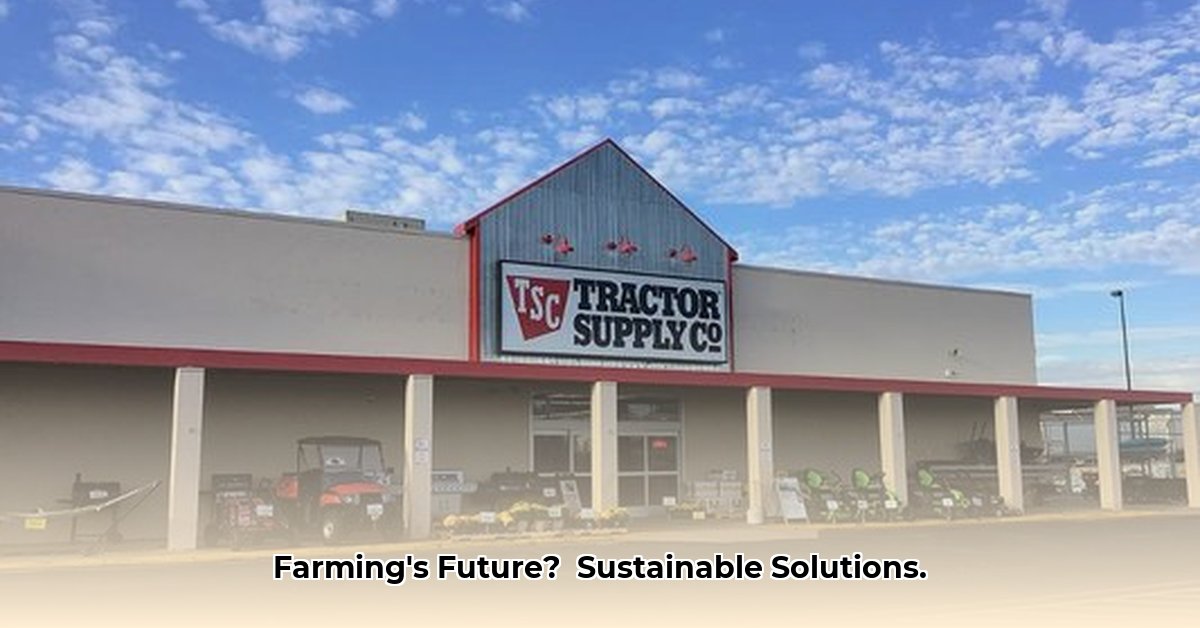
Tractor Supply Childress: A Partner in Sustainable Agriculture?
Childress, Texas, boasts a rich agricultural heritage, but the question of sustainability looms large. This article explores the multifaceted role of Tractor Supply (TSC) in Childress, examining its potential impact on sustainable farming practices. We'll dissect TSC's product offerings, analyze their alignment with eco-friendly farming, and present actionable steps for various stakeholders to foster a more sustainable agricultural future for Childress. This isn't merely an assessment; it's a roadmap towards collaborative progress. For further insights on agricultural supply competitors, check out this useful resource.
Tractor Supply's Potential Influence on Childress's Sustainable Agriculture
Childress's agricultural landscape—predominantly comprised of [Insert Specific Crops and Livestock from Research - e.g., cotton, cattle ranching] – presents unique challenges and opportunities for sustainable practices. The availability of resources like water and the prevalence of certain pests significantly influence farming methods and the environmental impact. Tractor Supply's influence arises from its position as a major supplier of agricultural inputs. What specific products does TSC offer? Does its inventory predominantly feature conventional pesticides and fertilizers, potentially hindering sustainable initiatives? Or does it stock eco-friendly alternatives, such as water-efficient irrigation systems, organic fertilizers, and bio-based pest controls, thereby supporting more sustainable farming practices? This requires a deep dive into TSC's inventory data and an assessment of prevailing farming methods in Childress. How many farmers in Childress utilize sustainable practices currently? This data is crucial to understanding the current baseline and TSC's potential impact on the overall ecological footprint. A quantifiable assessment of water usage, pesticide application, and soil health across Childress farms is necessary for a holistic understanding.
Childress's Agricultural Landscape: A Detailed Analysis
To accurately gauge TSC's role, a comprehensive understanding of Childress's agricultural ecosystem is paramount. What specific crops dominate the region? What livestock are prevalent? What are the prevalent farming practices (conventional vs. organic)? This detailed knowledge allows for a nuanced analysis of TSC's product offerings and their potential effects. For example, if cotton farming is dominant, the availability of water-efficient irrigation systems through TSC becomes a critical factor in evaluating its sustainability contribution. Similarly, the presence or absence of organic fertilizer options directly influences the ability of local farmers to embrace environmentally sound practices. Specific data on crop yields, water consumption, and pesticide application will paint a clearer picture.
Actionable Steps for a Sustainable Future in Childress
Significant progress towards sustainable agriculture in Childress necessitates collaborative action from diverse stakeholders. We outline actionable, step-by-step strategies for maximizing TSC's positive impact:
1. Farmers:
1.1 Inventory Review: Carefully examine TSC's product catalog for sustainable alternatives. (Compare options with other suppliers.)
1.2 Informed Choices: Prioritize eco-friendly products (e.g., organic fertilizers, bio-based pesticides).
1.3 Direct Feedback: Communicate your demand for an expanded range of sustainable products directly to TSC management.
2. Tractor Supply:
2.1 Transparent Labeling: Clearly label products highlighting their environmental impact (e.g., water usage, carbon footprint). (Make sourcing data readily available.) 2.2 Sustainable Sourcing: Actively expand the availability of eco-friendly alternatives; consider a dedicated "sustainable agriculture" section. 2.3 Farmer Education: Conduct workshops and provide educational resources on sustainable farming practices. (Collaborate with local agricultural extension services.)
3. Local Government:
3.1 Financial Incentives: Implement financial support programs to motivate adoption of sustainable farming methods. 3.2 Strategic Partnerships: Collaborate with TSC and other organizations to promote sustainable options. 3.3 Smart Regulation: Develop and implement policies encouraging water conservation and sustainable agriculture.
4. Researchers/Universities:
4.1 Environmental Impact Study:Conduct a comprehensive study analyzing TSC's impact on Childress's environment. (This should assess water usage, pesticide application, and soil health.) 4.2 Data Collaboration: Engage closely with farmers and TSC to gather accurate and relevant data. 4.3 Public Report: Publish findings to inform policy decisions and guide farmers' choices.
Addressing Critical Knowledge Gaps
Comprehensive analysis requires addressing several key knowledge gaps:
- TSC's Product Sustainability: Quantify the percentage of TSC's product offerings that directly support sustainable farming.
- Farmer Adoption Rates: Determine the current adoption rate of sustainable farming practices among Childress farmers.
- Environmental Footprint: Precisely measure the overall environmental impact of Childress agriculture (water usage, greenhouse gas emissions, energy consumption, soil health).
Addressing these gaps requires further research involving surveys, inventories, and environmental impact assessments. The use of robust data analysis techniques will ensure scientifically valid conclusions.
Conclusion: Forging a Sustainable Future Together
Tractor Supply's role in Childress's sustainable agriculture journey is multi-faceted and demands a collaborative approach. While TSC's presence offers potential benefits, the realization of a truly sustainable agricultural future hinges on informed choices by farmers, proactive measures by TSC, supportive policies from local government, and rigorous research from academic institutions. By working together, we can build a more environmentally responsible and prosperous agricultural future for Childress.